


 The materials science company Raychem invested heavily in the scientific analysis, research and development of substances, modifying existing and manufacturing many new materials.
In the leak detection industry it has resulted in world leading sensing cable technologies, utilising the radiation cross-linking of fluoropolymer materials and electronics monitoring circuitry that is capable of outstanding levels of accuracy and reliability.
Julian Waumsley explains how Aquilar contributes to the global R&D effort
Aquilar is involved at the customer or ‘application’ level. We provide a technical interpolation of the problems faced by and the changing needs of customers in the field, with an interface to developers within the TraceTek organisation. Aquilar therefore maintains close links with end-users, partner installers and consulting engineers.
What sort of problems might be evolving in the field?
 Three areas in commercial buildings particularly come to mind:
- Internet and telecommunications businesses have created a new breed of commercial building. Large-scale operations with substantial computer power which generate considerable amounts of heat and require effective cooling from air-conditioning plant. Chilled water AHU’s and condensate pipework within large-scale computer rooms are a risky combination.
- Satellite TV and broadcasting has really moved forward in the UK and Europe. There are technical rooms with voluminous electronics that need to be maintained at critical temperatures. Air-conditioning or cooling equipment, large or small, all have some form of water – condensation waste or chilled water supply, bringing the potential for leaks.
- There are numerous legacy and historic locations across the UK, with precious books, artworks and artefacts, in both public and private hands. In many cases water-based heating systems and cooling/humidification systems have been added post construction as HVAC technology has moved forward. These treasures and even the fabric of the building are then exposed to the risk of water leaks and even flooding. Even though insurance policies may cover monetary value, many such items could be lost forever.
 What are the avenues that Aquilar might explore to set about solving problems of this sort?
There are many: building new sensor devices, finding new products, or adapting devices from other industries or applications. This may involve adapting electronic circuitry to link the device into TraceTek or AquiTron systems, and to provide for fully supervised circuits.
What have been the successes of this programme?
There has been a requirement for individual isolating solenoid valves to be controlled when a leak has been detected within specific rooms or zones of a building. The introduction of the TraceTek TT-NRM (Network Relay Module) has enabled up to 320 individual alarm relays to be configured from a TTDM-128/TTSIM network.
As soon as the product was available it was incorporated into the project for the HM Treasury in London.
Pin point meterage location and single zone alarm systems have been available within the product range for many years. A requirement soon emerged for a multi zone alarm panel with individual isolated circuits and for each zone to have its own set of “leak” volt-free contacts.
The AquiTron™ AT-MZA panel was introduced at the start of 2003 and is being used on many applications requiring anything from 2 to 8 individual zones.
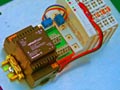 The AquiTron™ Water detection probes have been used with the TraceTek system for many years, and complements the TT1000 water sensing cables. From this came the development of the immersion probe AT-600A for use in drainage pipes and overflows. As the sensor has become more widely used we have seen many customers using the sensor as a level indicator in tanks to protect against a potential over-fill.
Which parts of the process take place at Aquilar in the UK?
Any or all, depending on the project: evaluation and design, initial prototyping, production prototyping, and final production, with design review at each stage.
 Are there any areas currently under development?
Yes, we are looking at a new kind of zone control system in response to growing demand for individual zone monitoring. Developments in the Industrial / Environmental markets have prompted a thorough review of the sensors needed in this fast moving and increasingly legislation driven sector.
More importantly, because of our close links with the end user via our field representatives and partner installers, we continuously monitor trends and emerging needs.